

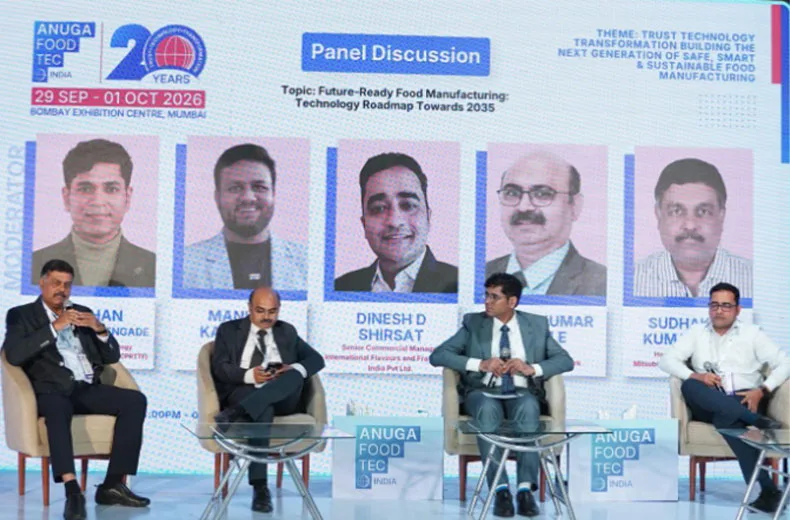
The technology roadmap towards 2035 panel discussion in Anuga Food Tech India provided a detailed look at the structural situation reshaping global food industry. Serving as the moderator, Bhushan Namdeorao Yengade, founder of Binder Technology Consultancy focused in the food industry project management and market research outlined the long-term geopolitical and technological shifts that will define the sector leading up to 2035.
The food industry is deeply impacted by vulnerabilities at key maritime transit points. The recent closure of the Hormuz Strait quickly destabilized food markets, causing food prices to rise worldwide. This economic disruption was intensified by subsequent shipping blocks in the Bab al-Mandab Strait, creating long-term logistics challenges for food manufacturers. Research from Binder Technology Consultancy indicates that these twin maritime crises caused a significant manufacturing price rise across the industry. When combined with the systemic shocks of El Nino, rising temperatures threaten severe crop failures in vulnerable agricultural zones. To prevent widespread food shortages, the international community must prioritize reducing post-harvest losses through modern technology.
Through Binder Technology research work, Yengade has consistently warned that traditional production methods must adapt to changing environmental realities. For instance, replacing manual washing lines which waste 18% to 25% of total process water with automated washing systems is an essential micro-technological upgrade.
Addressing these global challenges requires a shared strategic vision across corporate and regulatory lines. Discussing regulatory market dynamics, Dinesh D Shirsat evaluated how clean labelling standards impact profit margins and corporate agility. From an industrial planning perspective, Vijay Kumar Chole showed how regional agro-processing zones help scale circular economic models. On the technological front, Sudhakar Kumaravel discussed how artificial intelligence can support factory workers and improve manufacturing efficiency. In closing, Yengade emphasized that transparency and clean labelling are crucial for building consumer trust in a changing world. The deep discussions at Anuga Food Tech India made it clear that the next decade of food production will be defined by how well the industry balances geopolitical risk with sustainable technology.

